Getting there and the hour itself
Flamenco show: what to expect
How to reach the Museo del Baile Flamenco on foot, what an hour of live flamenco sounds like, photo rules, heat and access, and who may find it a poor fit.
Book your flamenco night ↗Quick answer
Expect about an hour of live flamenco in a courtyard: dance, singing and guitar, with the cast changing from day to day. The museum is in Seville's old centre, between Plaza de la Alfalfa and the Cathedral, and is easiest on foot. Arrive 30 minutes early because seats aren't numbered. Photos and video aren't allowed during the show, though you can photograph in the museum. Summer evenings are hot, so carry water.
The hour in order
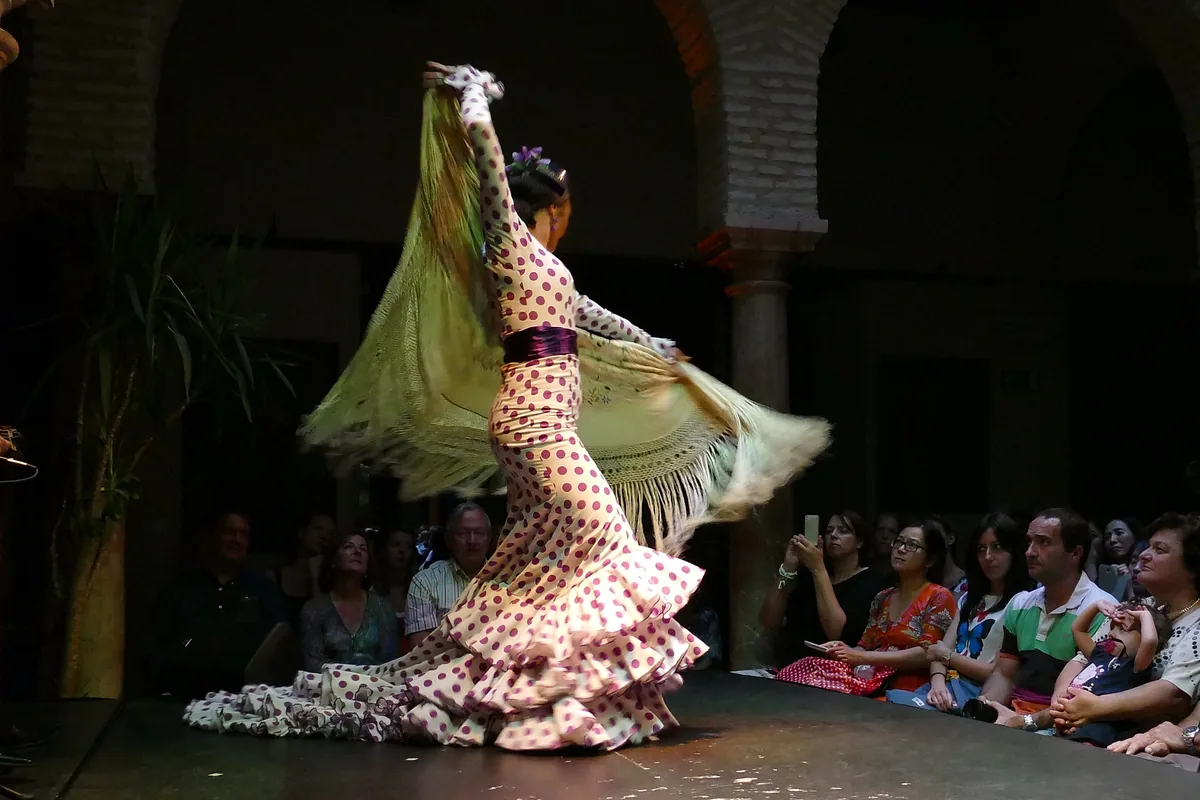
You take a seat, the lights drop and the performers come on. A flamenco show is built from three arts working together: baile, the dance, cante, the singing, and toque, the guitar. Dancers, singers and a guitarist share the stage, with the voice carrying the song and the guitar setting the pace. The show lasts about an hour, so it is short enough to enjoy in the evening without it taking over the night. There's no plot to follow and nothing you need to know in advance. The cast changes daily, so the faces differ from one evening to the next, but the three arts are always there.
The room: an Ecijan patio
The show takes place in one of the few Ecijan-style patios left in Seville, a courtyard style named after the town of Écija. The museum's history of the building says the courtyard has pink marble columns and a modern stage fitted with theatre lights, curtains and sound. The house is from the 18th century, and its works began in 2004. Above the audience, chairs with woven seats and orange trees hang in the air, an idea the museum chose to honour the public and the artists.
Finding the museum
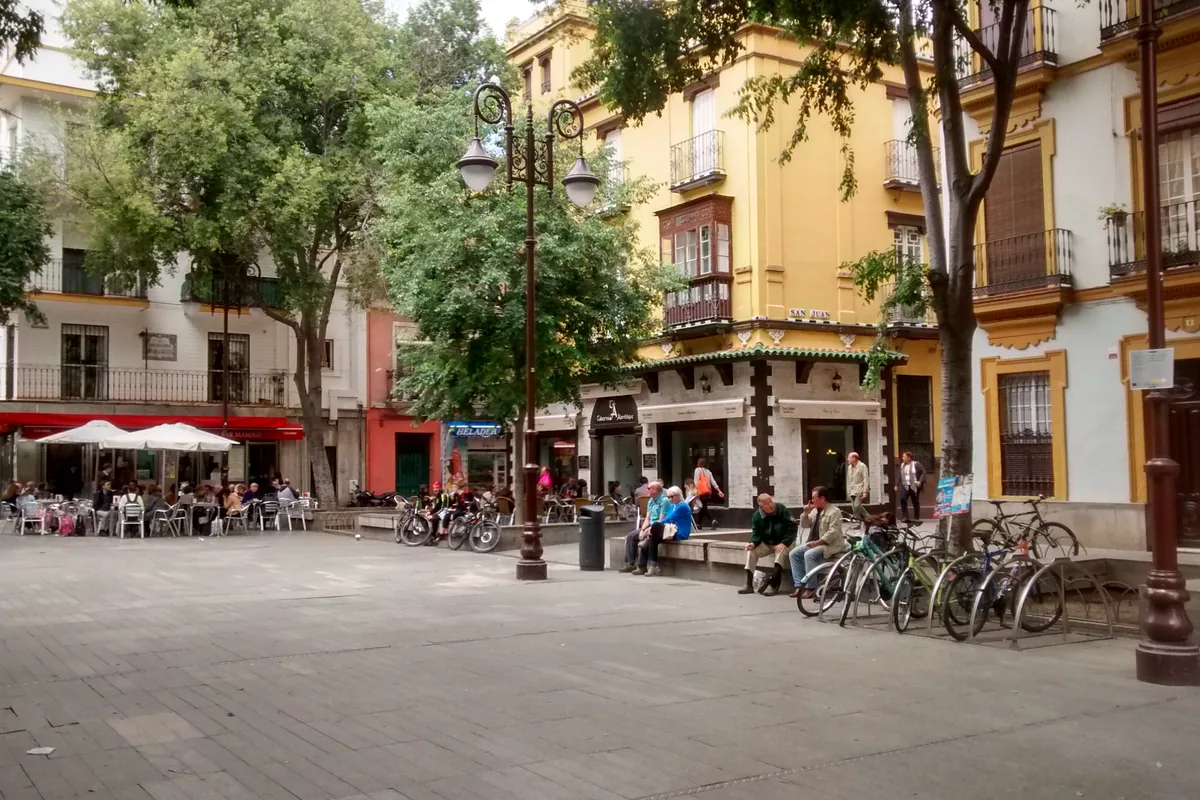
The Museo del Baile Flamenco is at Calle Manuel Rojas Marcos 3. Seville's tourism office places it in the San Isidoro district, between Plaza de la Alfalfa and the Cathedral. The streets there are narrow and old, and the best approach is on foot from either landmark. Put the address into a map app before you leave, because the old centre's lanes bend and change names quickly, and a printed or saved map helps if your phone signal drops between the tall walls. Allow a few extra minutes the first time, since the museum's entrance sits in the middle of a long street front.
By bus, tram, bike or on foot
The tourism office describes Seville as flat and sunny, with a long network of bike lanes and a public bike-hire scheme called Sevici. The city's bus network is large, run by the municipal company Tussam. The Metrocentro is a surface tram that reaches the monumental centre. Taxis are white with a yellow diagonal stripe and a green light when free. If you arrive in the city with bags, the tourism office lists luggage lockers where you can leave your belongings safely. Driving is a poor choice: the museum says car access is very limited, and names two car parks nearby, one on Calle Cuesta del Rosario and Parking Roma at Puerta de Jerez.
Arriving and getting a seat
Seats for the show aren't numbered, so they go to the people who arrive first. The booking page recommends being there at least 30 minutes early. Your confirmation shows the start time you booked, and the booking calendar lists the times offered for each date. Spend the waiting time looking up: chairs with woven seats and orange trees hang above the patio. Keep your mobile ticket open on your phone, and carry a bottle of water in summer.
Listening to the three parts
UNESCO, which inscribed flamenco on its list of intangible cultural heritage in 2010, describes it as song, dance and musicianship fused together. Cante is sung by men and women, with lyrics marked by brevity and simplicity. The dance covers a wide range of feeling, from sadness to joy. Toque, the guitar, has long gone beyond simply accompanying. Handclaps and foot-stamping add rhythm. Listen first for the beat the clapping sets, and the dance and song will start to make sense.
The styles you may meet
Flamenco is organised into palos, the traditional forms, and the museum says the cast changes each day, so the styles you see depend on the date. It names several: the solemn seguiriya, the soleá por bulerías, the tragic taranto and the sensual tangos. In practice you may hear a slow, heavy form followed by a quick one. The next guide to read, on flamenco styles, explains how to tell them apart without any musical training.
- Seguiriya: solemn, from the deepest song tradition
- Soleá: slow and weighty, in a twelve-beat cycle
- Tangos: lively, and a separate form from Argentine tango
- Bulerías: fast, often used to end a night
Read next: Flamenco styles, explained
Photos, phones and manners
The museum's rule is simple: photographs and video are allowed during the visit to the galleries, but not during the show, out of respect for the room and the professional artists. That means putting your phone away once the lights dim, not just switching off the flash. Let the performers set the mood. Keep conversation low, since the room is small and sound carries, and switch your phone to silent before you sit down so a ringtone doesn't cut across the guitar.
Heat, season and time of day
Wikipedia describes Seville as the warmest city in continental Europe. July and August highs average about 36°C, and the city has around 60 days a year above 35°C. Winters are mild, with December and January highs of 16 to 18°C, and December is the wettest month. In summer, plan the walk to the museum for the cooler end of the day and carry water. In winter, bring a layer for the walk home after an evening show.
Access and children
The booking page lists the show as wheelchair accessible. The museum says its building is fully accessible, with lifts between all four floors, an adapted toilet on the ground floor and a welcome for guide dogs. It also gives accessible parking bays on streets around the building. For children, the booking calendar shows which age options each date offers, so pick the correct one when you choose, and have children's dates of birth in mind if the page asks for ages. A one-hour show suits children who can sit still for that long better than toddlers, so choose the age option that fits your child on the booking page.
Who this isn't for
Anyone expecting a dinner table alongside the performance should look elsewhere. If you want to film or photograph the dancers, the rules rule it out. People who need to know exactly where they'll sit should know that seats aren't numbered. And if the idea of a slow-building, emotional art form sounds like hard work after a long day of walking, an hour of flamenco is still short enough to try once and decide.
Frequently asked questions
What should I wear to a flamenco show in Seville?
Wear what is comfortable for the old centre's uneven streets. In summer choose light clothes for the walk, and in winter bring a layer for the walk home.
Do I need to understand Spanish?
No. Dance and guitar need no translation, and UNESCO notes that flamenco lyrics are brief and simple. The museum itself is set up in 13 languages.
How far in advance should I arrive?
At least 30 minutes before the start. Seats aren't numbered, so earlier arrivals choose where to sit.
Can I take photos or film the show?
No. Photos and video are allowed in the museum galleries, but not during the show.
Is the museum easy to reach by car?
Not really. The museum says access by car is very limited and points to car parks on Calle Cuesta del Rosario and at Puerta de Jerez. Walking from Plaza de la Alfalfa or the Cathedral is simpler, and taxis are an alternative.
Is it good for a first flamenco show?
It suits a first show well: about an hour, no plot to follow, and a new cast each day. Read the guide on flamenco styles beforehand if you want more to listen for, but you don't need it to enjoy the evening.
Sources